
Introduction: Want More Plants Without Spending More Money?
If you’ve ever wished you could turn one healthy houseplant into several new ones, you’re not alone. Many beginners think plant propagation is complicated or only for experts—but the truth is, it’s one of the easiest and most rewarding parts of indoor gardening.
Learning how to propagate indoor plants at home lets you:
-
Rejuvenate stretched or overgrown plants
-
Spread the green love with those around you.
-
Feel more confident as a plant parent
This guide is written especially for beginners in the United States. I’ll walk you through simple, proven propagation methods using common houseplants—no fancy tools, no stress.
What Does Plant Propagation Mean?
Plant propagation is simply the process of creating new plants from an existing one. Indoors, this usually means growing roots from:
-
Stem cuttings
-
Leaf cuttings
-
Divisions
-
Offsets (baby plants)
Most popular houseplants are surprisingly eager to grow new roots when given the right conditions.
Best Indoor Plants for Propagation at Home
If you’re new to propagation, start with forgiving plants that root easily.
Easy Plants to Propagate for Beginners
-
Pothos
-
Philodendron
-
Spider plant
-
Snake plant
-
ZZ plant
-
Monstera
-
Tradescantia
-
Succulents
These plants don’t require special equipment and tolerate small mistakes.
When Is the Best Time to Propagate Indoor Plants?
Timing matters more than people realize.
Ideal Propagation Season
-
Best done in spring or early summer
-
Plants are actively growing
-
Roots develop faster and stronger
You can propagate year-round indoors, but growth will be slower in fall and winter.
Tools You’ll Need (Simple & Affordable)
-
Use clean, sharp scissors or pruning shears
-
Small jars or glasses
-
Fresh potting soil
-
Small pots with drainage holes
-
Optional: rooting hormone (not required)
Clean tools are important to prevent disease.
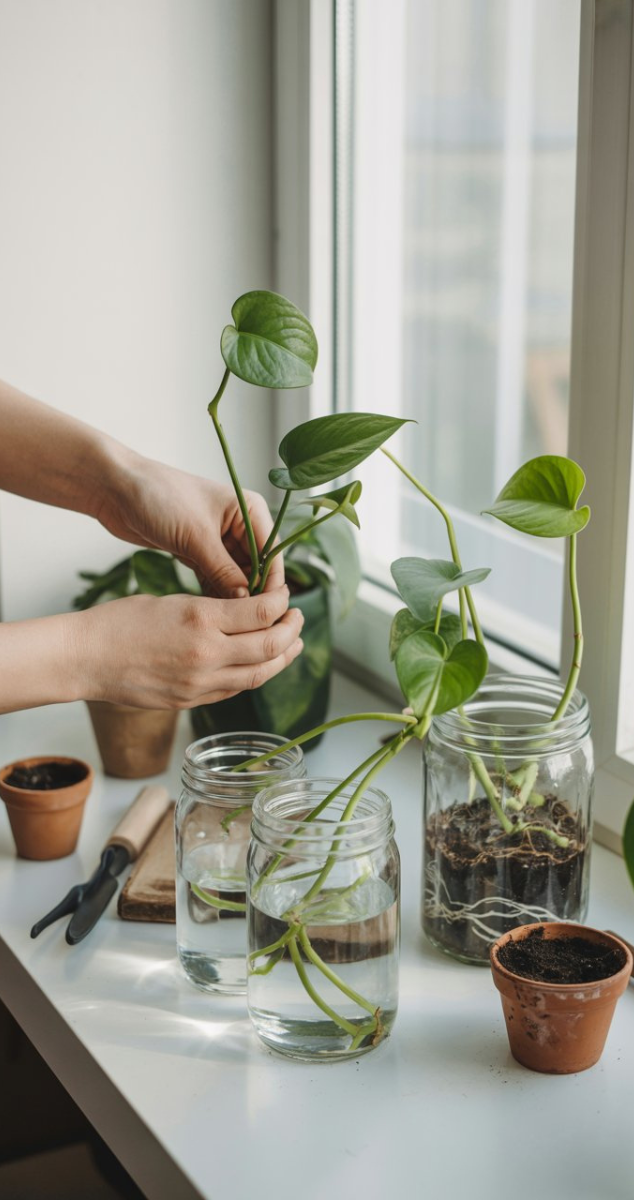
Method 1: How to Propagate Indoor Plants in Water
Water propagation is the most beginner-friendly method and very satisfying because you can watch roots grow.
Plants That Love Water Propagation
-
Pothos
-
Philodendron
-
Monstera
-
Tradescantia
-
Lucky bamboo
Step-by-Step Water Propagation
-
-
Cut just below the node
-
Remove any leaves that would touch the water
-
Put the cutting into a clean jar filled with room-temperature water, making sure the node is fully submerged.
-
Put it in bright, indirect light
-
Change the water regularly — every 3 to 5 days
When to Transfer to Soil
-
Roots should be 1–2 inches long
-
This usually takes 2–4 weeks
Water roots are fragile, so plant gently.
Method 2: How to Propagate Indoor Plants in Soil
Soil propagation creates stronger roots from the start and works well for many houseplants.
Best Plants for Soil Propagation
-
Pothos
-
Philodendron
-
ZZ plant
-
Rubber plant
-
Herbs grown indoors
How to Propagate in Soil
-
Take a healthy cutting with a node
-
Let the cut end dry for 30–60 minutes
-
Insert the cutting into slightly damp soil.
-
Press soil gently around the stem
-
Place in warm, indirect light
Pro Tip
Keep soil slightly moist—not wet. Overwatering is the #1 mistake beginners make.
Some plants can grow entirely from a single leaf.
Plants That Work Well
-
Snake plant
-
Succulents
-
African violet
Leaf Propagation Steps
-
Cut a healthy leaf cleanly
-
Let it dry and callus for 1–2 days
-
Insert the cut end into soil
-
Water gently and be patient.
This method takes patience—new growth may take several weeks.
Method 4: Division Propagation for Mature Plants
Division is the fastest way to get a full-sized new plant.
Plants That Can Be Divided
-
Snake plant
-
Peace lily
-
ZZ plant
-
Ferns
How to Divide an Indoor Plant
-
Remove the plant from its pot
-
Carefully tease apart the roots.
Water lightly after repotting.
Light and Temperature for Successful Propagation
Best Conditions for Root Growth
-
Bright, indirect light
-
Warm temperatures (65–80°F)
-
Avoid direct sun, which can dry cuttings
Cold drafts and low light slow root development.
Common Propagation Mistakes Beginners Make
Avoid these common issues to improve success.
Mistakes to Watch Out For
-
Dull or contaminated tools can damage your plant.
-
Overwatering soil cuttings
-
Leaving leaves submerged in water
-
Moving cuttings too often
Propagation works best when conditions stay stable.
How Long Does Indoor Plant Propagation Take?
Propagation isn’t instant—but it’s worth the wait.
General Timeline
-
Water roots: 1–4 weeks
-
Soil roots: 2–6 weeks
-
New leaf growth: 1–2 months
Some plants root faster than others, so don’t panic if progress seems slow.
Caring for Newly Propagated Indoor Plants
Once your cutting becomes a baby plant, gentle care is key.
Aftercare Tips
-
Keep light indirect
-
Start with very little water
-
Avoid fertilizer for the first month
Let the plant focus on root growth before pushing new leaves.
You may also like this
Low-Maintenance Houseplants for Beginners
How to Grow Indoor Plants Without Sunlight
Everyday Houseplant Issues and Simple Ways to Solve Them
Why Some Cuttings Fail (And That’s Okay)
Even experienced plant owners lose cuttings sometimes. Failure doesn’t mean you did something wrong.
Possible reasons include:
-
Weak parent plant
-
Seasonal slowdown
-
Rapid temperature shifts can cause stress
Propagation is a skill—you’ll improve every time you try.
Conclusion: Propagating Indoor Plants Is Easier Than You Think
Learning how to propagate indoor plants at home is one of the best ways to grow your indoor garden with confidence. You don’t need expensive tools or expert knowledge—just healthy plants, patience, and a little curiosity.
Start with one cutting. Watch roots form. Before you know it, you’ll have more plants than you planned—and that’s a good problem to have.