
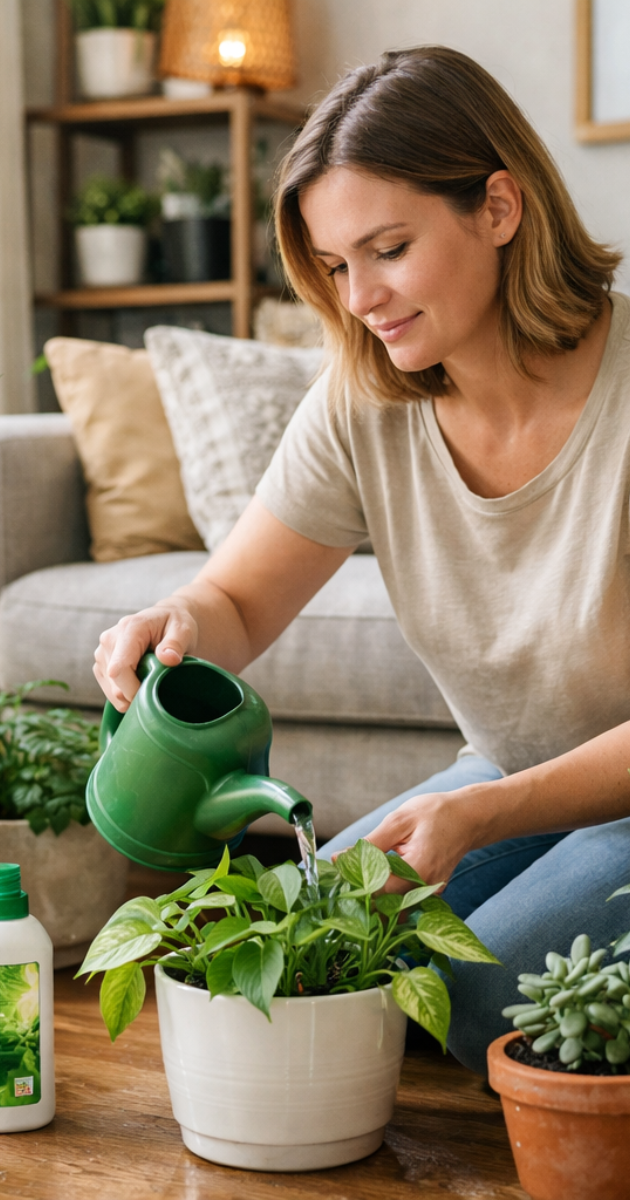
Indoor plants can survive for a long time on light, water, and decent soil—but to truly grow, stay green, and look their best, they need nutrients. That’s where fertilizing indoor plants comes in.
For beginners, fertilizing often feels confusing or even risky. Too much? Too little? The wrong kind? Many new plant owners either over-fertilize and burn their plants or skip fertilizing altogether and wonder why growth stalls.
Don’t worry. By the end of this guide, you’ll know exactly how to fertilize indoor plants the right way, without harming them or overcomplicating the process.
Why Indoor Plants Need Fertilizer
In nature, plants get nutrients from decaying organic matter, rain, insects, and constantly renewing soil. Indoor plants don’t have that luxury.
Once a plant uses up the nutrients in its potting soil, there’s nowhere else to get food unless you provide it.
Fertilizer helps indoor plants by:
-
Supporting steady leaf and root growth
-
Improving leaf color and overall health
-
Encouraging flowering (for flowering plants)
-
Preventing nutrient deficiencies
Without fertilizer, most houseplants won’t die quickly—but they won’t thrive either.
What Fertilizer Actually Does
Fertilizers provide three main nutrients, shown on labels as N–P–K:
-
Nitrogen (N): Supports lush, green foliage development
-
Phosphorus (P): Supports roots and flowers
-
Potassium (K): Strengthens overall plant health
Most indoor plants prefer a balanced fertilizer, meaning these nutrients are present in roughly equal amounts.
Types of Fertilizer for Indoor Plants
Choosing the right type is easier when you know the basics.
Liquid Fertilizer
-
Diluted in water and used during irrigation.
-
Fast-acting and easy to control
-
Ideal for beginners
This is the most popular option for fertilizing indoor plants.
Granular Fertilizer
-
Slow-release pellets mixed into soil
-
Nourishes plants gradually over time
-
Harder to adjust if overused
Best for experienced plant owners who want low maintenance.
Organic Fertilizer
-
Made from natural sources
-
Gentler and less likely to burn roots
-
Slower results
A good option if you prefer natural gardening methods.
When to Fertilize Indoor Plants
Timing matters more than most people think.
The Active Growing Season
Most houseplants put on their strongest growth during the spring and summer months. This is when fertilizing indoor plants is most important.
-
Fertilize every 2–4 weeks during this period
Fall and Winter
Growth slows down when light levels drop.
-
Decrease feeding frequency to every 6–8 weeks
-
Some plants don’t need fertilizer at all in winter
Fertilizing a dormant plant can stress it rather than help it.
How Often Should You Fertilize Indoor Plants?
There’s no universal schedule, but these guidelines work well for beginners:
-
Most leafy houseplants: Once a month during spring and summer
-
Fast growers (pothos, philodendron): Every 2–3 weeks
-
Succulents and cacti: Every 6–8 weeks during growing season
-
Flowering plants: Every 2 weeks while blooming
If in doubt, fertilize less, not more.
How to Feed Your Indoor Plants: Step by Step
This is the safest, beginner-friendly method.
Step 1: Water the Plant First
Never fertilize dry soil. Dry roots absorb fertilizer too quickly, which can cause damage.
-
Lightly water the plant first
-
Wait a few minutes before fertilizing
Step 2: Dilute the Fertilizer
Always dilute liquid fertilizer more than recommended for indoor plants.
-
Use half the suggested strength
-
Indoor plants need less than outdoor plants
Step 3: Apply Evenly
-
Pour fertilizer solution evenly over the soil
-
Avoid splashing leaves unless the product says it’s safe
Step 4: Drain Excess Water
Make sure excess liquid drains out of the pot. Never let plants sit in fertilizer-filled water.
Common Fertilizing Mistakes to Avoid
Many indoor plant problems come from fertilizing errors, not lack of care.
Over-Fertilizing
This is the most common mistake.
Signs include:
-
Brown or crispy leaf edges
-
White residue building up on the soil surface
-
Abrupt wilting even when soil is adequately moist
If this happens, flush the soil with plain water and stop fertilizing for a few weeks.
Fertilizing Newly Repotted Plants
Fresh potting soil already contains nutrients.
-
Wait 4–6 weeks after repotting before fertilizing
Using Outdoor Fertilizer Indoors
Outdoor formulas are often too strong for indoor plants.
-
Always use fertilizer labeled for houseplants
Do All Indoor Plants Need Fertilizer?
Not always, and not equally.
Plants That Need Minimal Fertilizer
-
Snake plants
-
ZZ plants
-
Succulents and cacti
These plants grow slowly and store nutrients efficiently.
Plants That Benefit from Regular Feeding
-
Pothos
-
Monstera
-
Peace lily
-
Philodendron
-
Fiddle leaf fig
These use nutrients faster and show clear improvements with proper feeding.
How to Tell If Your Plant Needs Fertilizer
Plants don’t ask for food directly—but they give clues.
Common signs include:
-
Faded or yellowed foliage.
-
Slow or stalled growth during spring or summer
-
Smaller new leaves
-
Lack of flowers
Before fertilizing, always rule out light and watering issues, which are more common causes.
You may also like this
Low-Maintenance Houseplants for BeginnersBeginner Mistakes to Avoid in Indoor Gardening
How to Grow Indoor Plants Without SunlightEveryday Houseplant Issues and Simple Ways to Solve Them
Indoor Plant Care for Beginners: A Complete Guide
Fertilizing Indoor Plants Naturally
If you prefer a gentler approach, natural options can help.
Beginner-friendly natural methods:
-
Diluted organic liquid fertilizer
-
Worm castings mixed into soil
-
Compost tea (used sparingly indoors)
Avoid household myths like coffee grounds or banana peels—they often cause mold and pests indoors.
Final Thoughts: Fertilizing Indoor Plants the Right Way
Fertilizing indoor plants doesn’t need to be complicated or intimidating. When done correctly, it’s one of the easiest ways to help your plants grow healthier, greener, and stronger.
Remember:
-
Fertilize during active growth
-
Use diluted fertilizer
-
Feed less rather than more
-
Match fertilizer frequency to plant type
With a simple, consistent approach, you’ll avoid common mistakes and give your indoor plants exactly what they need—no guesswork required.