
Growing herbs indoors sounds simple—until your basil turns pale, your cilantro bolts too fast, or your parsley barely grows. Many beginners in the U.S. start with excitement, only to feel frustrated when their kitchen herbs don’t thrive.
The good news? Indoor herb gardening isn’t complicated once you understand what herbs truly need. With the right light, soil, and care routine, you can grow fresh herbs indoors all year round—no backyard required.
Why Growing Herbs Indoors Is Different from Outdoors
Outdoor herbs benefit from natural sunlight, airflow, and changing seasons. Indoors, you control everything—which is both an advantage and a challenge.
When growing herbs indoors year-round, you need to recreate three essential elements:
-
Bright light
-
Proper drainage
-
Consistent watering habits
Once you get these right, success becomes much easier.
Choose the Right Herbs for Indoor Success
Not all herbs perform equally well inside. Some adapt beautifully to containers and indoor lighting, while others struggle.
Best Herbs to Grow Indoors All Year
These are reliable choices for beginners:
-
Basil (needs bright light)
-
Parsley
-
Chives
-
Mint
-
Thyme
-
Oregano
-
Rosemary (needs strong light)
If you’re just starting out, begin with two or three herbs. Managing a small collection helps you learn their needs without feeling overwhelmed.
Light: The most important element for growing herbs indoors
If your herbs look thin, pale, or leggy, the problem is usually light.
How Much Light Do Indoor Herbs Need?
Most herbs require:
-
6–8 hours of bright light daily
If natural light is limited—especially during winter—consider a simple grow light. Many affordable LED grow lights provide consistent light that keeps herbs productive year-round.
Tip: Rotate your pots every few days so plants grow evenly instead of leaning toward the window.
The Right Containers Make a Big Difference
Herbs dislike soggy soil. Poor drainage is one of the biggest beginner mistakes.
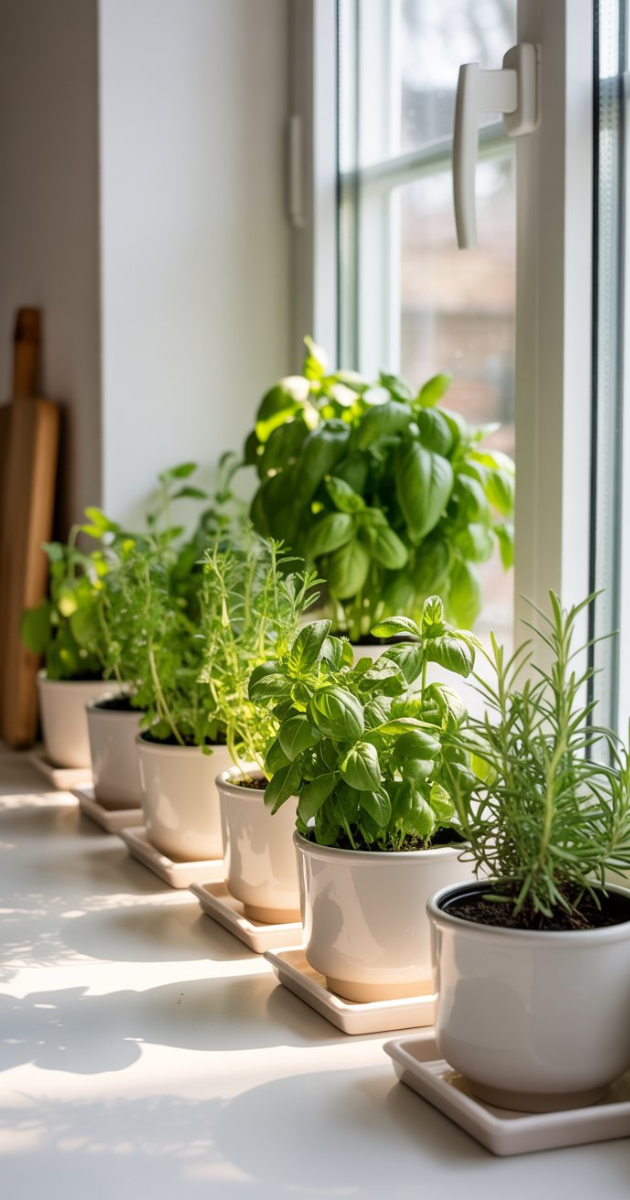
What to Look for in a Pot
-
Drainage holes at the bottom
-
A saucer to catch excess water
Avoid oversized containers. Too much soil holds excess moisture and can cause root problems.
Soil: Don’t Use Garden Dirt
Regular outdoor soil is too heavy for containers. It compacts easily and drains poorly indoors.
Instead, use:
-
High-quality potting mix
-
A blend labeled for container plants
-
Optional: add a little perlite for improved drainage
Light, airy soil allows roots to breathe and prevents overwatering issues.
Watering Indoor Herbs the Right Way
Overwatering kills more indoor herbs than underwatering.
Simple Watering Rule for Beginners
Water the soil only when the top layer feels dry.
Here’s how:
-
Once the soil feels dry to the touch, give it a deep, thorough watering.
-
Make sure all extra water flows out fully before setting the pot back in place
-
Empty the saucer after 10–15 minutes.
Herbs like thyme, rosemary, and oregano prefer slightly drier conditions. Basil and parsley enjoy a bit more consistent moisture—but never soggy soil.
Temperature and Airflow Matter More Than You Think
Most culinary herbs grow well in typical indoor temperatures:
-
65–75°F during the day
-
A bit cooler during nighttime hours
Keep herbs away from:
-
Heating vents
-
Drafty windows
-
Air conditioners
Good airflow helps prevent mold and weak growth. Even a small fan on low (not directly on the plant) can improve air circulation.
How to Pick Herbs Without Damaging or Destroying the Plant
Many beginners accidentally damage their herbs by cutting too much at once.
Smart Harvesting Tips
-
-
Pick your herbs frequently to promote fuller, more compact growth.
Frequent light trimming keeps herbs compact and productive.
Fertilizing Indoor Herbs (Keep It Simple)
Indoor herbs don’t need heavy feeding.
During spring and summer:
-
Use a balanced liquid fertilizerApply an all-purpose liquid fertilizer.
-
Mix it down to half the recommended concentration.
-
Feed once every 4–6 weeks
In fall and winter, growth naturally slows. Reduce or pause fertilizing during this time.
Common Problems When Growing Herbs Indoors
Even with good care, you may notice small issues. Here’s how to recognize them:
-
Yellow leaves: Often overwatering
-
Slow growth: Needs more light or light feeding
-
Wilting despite wet soil: Possible root rot
The key is observation. Check your herbs every few days and adjust gradually instead of making drastic changes.
Can You Really Grow Herbs Indoors in Winter?
Yes—absolutely.
Winter success depends mainly on light. Since daylight hours are shorter in many parts of the U.S., adding a grow light often makes the biggest difference.
With consistent lighting and moderate watering, herbs can stay productive even when it’s freezing outside.
A Simple Starter Setup for Beginners
If you want the best way to start growing herbs at home:
-
2–3 small pots with drainage
-
Quality potting mix
-
A bright south-facing window
-
Optional LED grow light for winter
-
Small watering can
Start small. Learn how each herb responds to your home environment. Indoor gardening improves with practice.
You may also like this
Indoor Plant Care for Beginners: A Complete Guide
Indoor Gardening Tips for Small Spaces: A Beginner’s Guide to Growing More in Less Room
Best Indoor Plants for Beginners with Pets
Easy Indoor Plants Anyone Can Grow
FAQ: Growing Herbs Indoors All Year Round
Final Thoughts: Fresh Flavor in Every Season
Growing herbs indoors all year round isn’t about perfection—it’s about creating the right conditions and paying attention to your plants.
Remember the basics:
-
Bright light is essential
-
Drainage prevents most problems
-
Water only when soil feels dry
-
Harvest regularly for healthy growth
Once you understand these fundamentals, fresh basil, thyme, or parsley can be just steps away from your kitchen—no matter the season.
Indoor herb gardening is one of the easiest and most rewarding ways to bring greenery into your home. And with a little patience, you’ll enjoy fresh flavor all year long.