
Living in a small apartment or compact home doesn’t mean you have to give up on indoor gardening. In fact, limited space often inspires smarter, more creative plant setups.
Many beginners in the U.S. believe they need a large house, a sunroom, or a backyard to grow plants successfully. The truth? With the right indoor gardening tips for small spaces, you can create a lush, thriving indoor garden—even in a studio apartment.
If you have ever felt that your space is too limited to accommodate plants, this guide is designed with you in mind. Discover how to transform even the smallest area into a lush and inviting sanctuary filled with greenery.
Why Small Spaces Can Actually Be Perfect for Indoor Gardening
Small areas have surprising advantages:
-
Easier to monitor light conditions
-
Less space to water and maintain
-
Faster cleanup and fewer pests
-
More control over temperature
Instead of spreading plants throughout a large home, you concentrate your care in one manageable area. That’s a big win for beginners.
The key is choosing the right plants and using space wisely.
Step 1: Choose Compact, Space-Saving Plants
Not all houseplants are created equal. Some grow tall and wide quickly, while others stay neat and manageable.
For small-space indoor gardening, look for:
🌿 Upright Plants (Grow Up, Not Out)
These take advantage of vertical space:
-
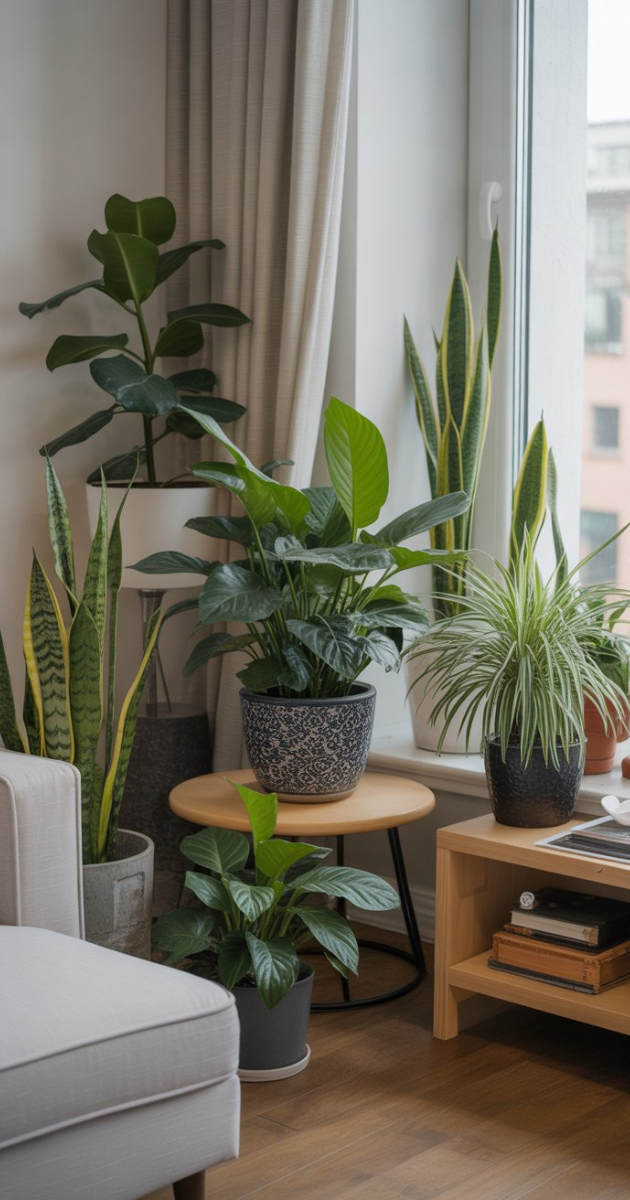
Snake Plant
-
ZZ Plant
-
Dracaena varieties
-
Rubber Plant (small varieties)
They fit perfectly in corners and beside furniture.
🌱 Trailing Plants (Perfect for Shelves)
Instead of taking up floor space, these cascade beautifully:
-
Pothos
-
Heartleaf Philodendron
-
String of Pearls
-
Spider Plant
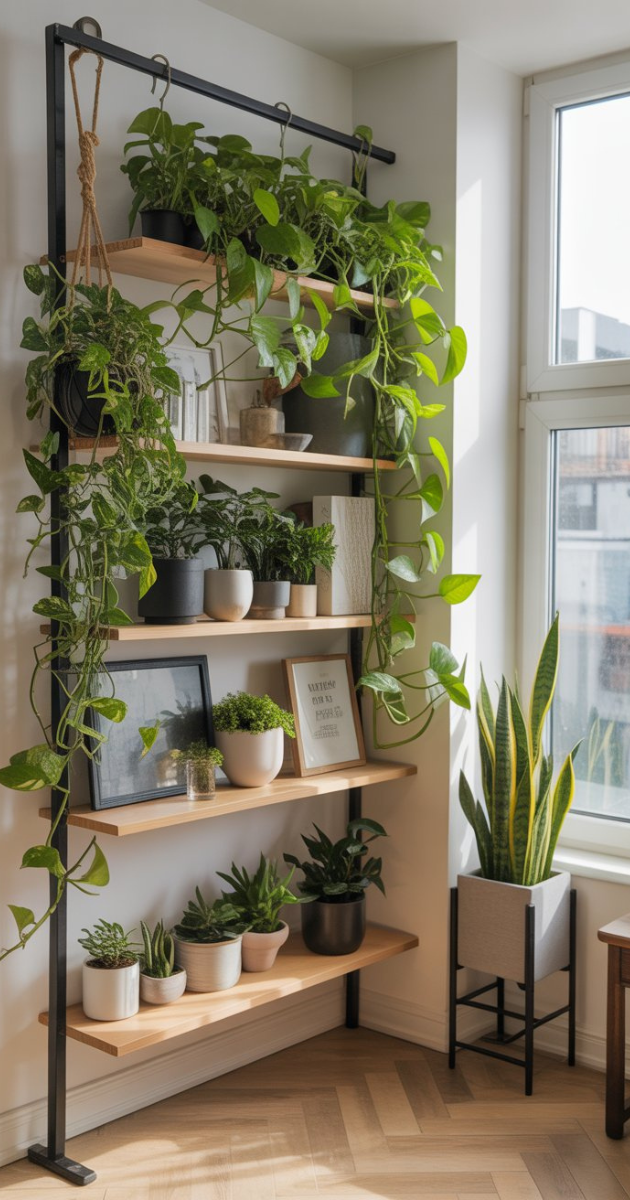
Place them on floating shelves or bookcases and let them spill downward.
🌵 Miniature & Slow-Growing Plants
Great for desks and countertops:
-
Succulents
-
Cacti
-
Peperomia
-
Small ferns
These plants stay compact and require minimal trimming.
Step 2: Use Vertical Space Like a Pro
One of the most important indoor gardening tips for small spaces is simple: think upward.
When available floor area is scarce, utilizing vertical surfaces becomes the most effective solution.
Here’s how to use it effectively:
-
Install floating shelves near windows
-
Use wall-mounted planters
-
Hang plants from ceiling hooks
-
Add a narrow plant ladder shelf
-
Place a tall plant stand in empty corners
Vertical gardening not only saves space—it creates visual interest and makes your room feel styled rather than crowded.
Step 3: Maximize Natural Light (Without Blocking Windows)
Light is often the biggest challenge in small apartments.
Before buying plants, observe:
-
Which windows get the most light?
-
Is the light direct or indirect?
-
How many hours of brightness do you get?
Smart Light Placement Tips
-
Keep taller plants to the side of windows, not directly in front.
-
Use lightweight curtains to tone down harsh sun rays.
-
Rotate plants every few weeks for even growth.
-
Place low-light plants (like snake plants) farther from windows.
If natural light is very limited, consider a small grow light. Modern options are compact, energy-efficient, and easy to hide in décor.
Step 4: Choose the Right Containers for Small Areas
Bulky pots can overwhelm tight spaces. Instead, choose containers that match the scale of your room.
Look for:
-
Slim, tall planters
-
Wall-mounted pots
-
Hanging baskets
-
Stackable planters
-
Window sill trays
Always make sure pots have drainage holes. Overwatering is one of the most common beginner mistakes, especially in small spaces where airflow may be limited.
If you’re using decorative pots without drainage, keep the plant in a nursery pot inside it.
Step 5: Create Mini Plant Zones
Instead of scattering plants randomly, group them into small “plant zones.”
Examples:
-
A kitchen herb corner
-
A bathroom humidity shelf
-
A bedroom bedside plant trio
-
A living room plant ladder
Grouping plants:
-
Makes watering easier
-
Creates a cleaner look
-
Improves humidity slightly
-
Prevents clutter
Even three well-placed plants can transform a small room.
Step 6: Keep Maintenance Simple
Small spaces can feel crowded quickly. The goal is to keep your indoor garden low-stress and manageable.
Follow these beginner-friendly habits:
-
-
Wipe leaves monthly with a damp cloth
-
Remove yellow leaves promptly
-
Avoid over-fertilizing (once monthly in spring/summer is enough)
Healthy plants look neat and intentional. Struggling plants make small spaces feel messy.
Step 7: Grow Edible Plants Without a Backyard
Yes—you can grow food indoors in small spaces.
Try:
🌿 Kitchen Herbs
Perfect for sunny windows:
-
Basil
-
Mint
-
Parsley
-
Chives
-
Thyme
They stay compact and give you fresh flavor for cooking.
🍅 Compact Edibles
If you have strong light:
-
Cherry tomatoes (dwarf varieties)
-
Small chili peppers
-
Green onions in water
Indoor gardening tips for small spaces often focus on décor, but edible plants add both beauty and function.
It’s tempting to keep buying plants once you fall in love with indoor gardening. But too many plants can:
-
Block light
-
Restrict airflow
-
Increase humidity too much
-
Make rooms feel cramped
Start small.
Add plants gradually. Step back and look at your space from different angles.
If it feels crowded, it probably is.
Remember: A few healthy plants look better than many struggling ones.
Bonus Tip: Use Mirrors to Enhance Light and Greenery
Here’s a simple design trick many beginners overlook:
Place a mirror opposite or near your plants.
Mirrors:
-
Reflect natural light
-
Make rooms feel larger
-
Multiply the visual effect of greenery
It’s an easy way to make your indoor garden feel bigger without adding more plants.
Quick Setup Plan for Beginners in Small Apartments
-
Identify your brightest window.
-
Choose 2–3 beginner-friendly plants.
-
Add one vertical element (shelf or hanging plant).
-
Keep watering simple and consistent.
-
Observe how your plants respond for 4 weeks.
That’s it.
No complicated systems. No overcrowding.
Just smart, intentional indoor gardening.
You may also like this
How to Select the Ideal Pot for Healthy Indoor Plants
Beginner Mistakes to Avoid in Indoor Gardening
Best Indoor Plants for Beginners with Pets
How to Make Indoor Plants Grow Faster Naturally
FAQ: Indoor Gardening in Compact Spaces
Which indoor plants are most suitable for small areas?
Compact and low-maintenance plants such as snake plants, pothos, ZZ plants, and miniature succulents are excellent choices. They require minimal care and do not take up much room, making them ideal for limited spaces.
How can I grow plants in a small apartment with little natural light?
Position your plants close to the brightest window in your home and select varieties that adapt well to low-light conditions. If natural light is insufficient, using a small indoor grow light can effectively supplement their needs.
How frequently should indoor plants be watered in confined spaces?
Irrigate your plants only when the upper 1–2 inches of soil have dried out. Rather than adhering to a strict timetable, assess the moisture level of the soil before watering.
Is it possible to cultivate herbs indoors in a small kitchen?
Certainly. Herbs such as basil, mint, parsley, and chives thrive on well-lit windowsills and require minimal space, making them well-suited for compact kitchens.
How can I keep a small area from appearing cluttered with plants?
Begin with a limited number of plants and incorporate vertical shelving to maximize space. Avoid filling every available corner, and aim for a clean, well-balanced arrangement to maintain an open and inviting atmosphere.
Final Thoughts: Small Space, Big Green Impact
Indoor gardening tips for small spaces aren’t about squeezing plants wherever they fit. They’re about designing thoughtfully.
Even the tiniest apartment can support beautiful greenery when you:
-
Choose compact plants
-
Use vertical space
-
Maximize light
-
Keep maintenance simple
-
Avoid clutter
Start with one corner. Then build from there.
Small spaces don’t limit your indoor garden—they refine it. And once you see how much life a few plants can bring into your home, you’ll realize that size truly doesn’t matter.
Your indoor garden doesn’t need more square footage.
It just needs smart choices.