
If you love the look of indoor plants but barely have time to fold laundry, you’re not alone.
Many beginners in the United States bring home a beautiful plant with good intentions—only to watch it struggle because life gets busy. Between work, family, errands, and everything else, remembering watering schedules and care routines can feel overwhelming.
Here’s the good news: indoor plant care for busy people doesn’t have to be complicated. With the right plant choices and a few smart habits, you can enjoy healthy, thriving houseplants without turning plant care into a second job.
Let’s make this straightforward and easy to follow.
Why Most Busy Beginners Lose Plants (And How to Avoid It)
The biggest mistake I see? Overcomplicating things.
New plant owners often:
-
Water on a strict schedule instead of checking soil
-
Choose high-maintenance plants
-
Ignore lighting conditions
When you’re busy, you need systems that work with your schedule—not against it.
The key is choosing forgiving plants and creating low-effort routines.
Step 1: Choose Plants That Don’t Demand Attention
Not all houseplants are created equal. Some need constant monitoring, while others practically take care of themselves.
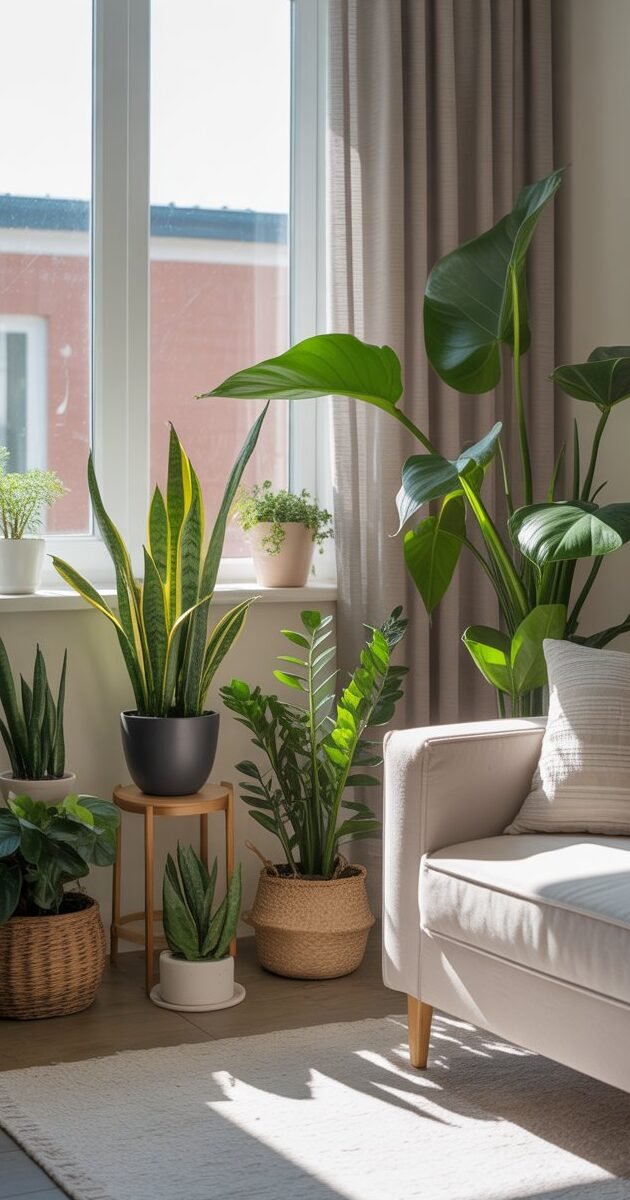
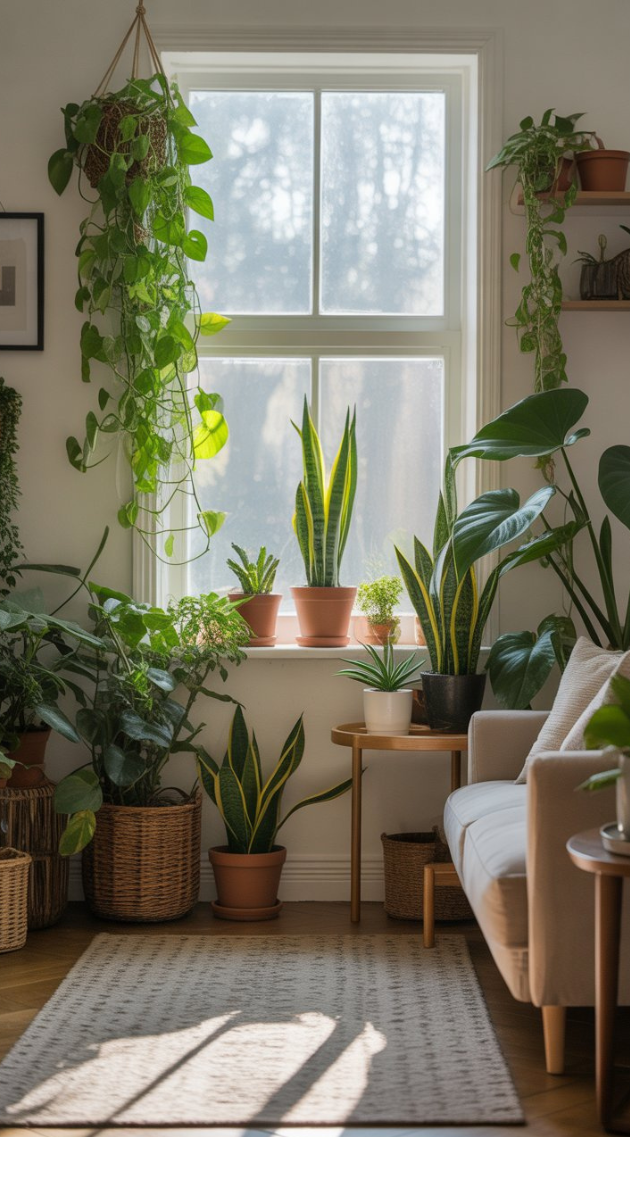
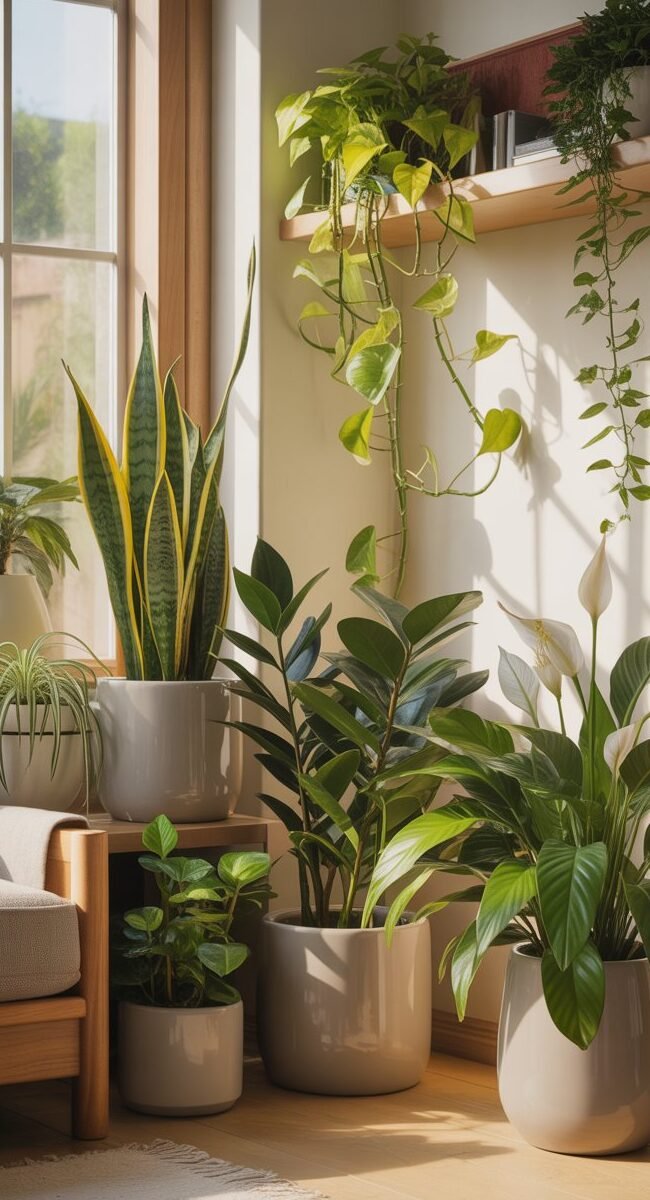
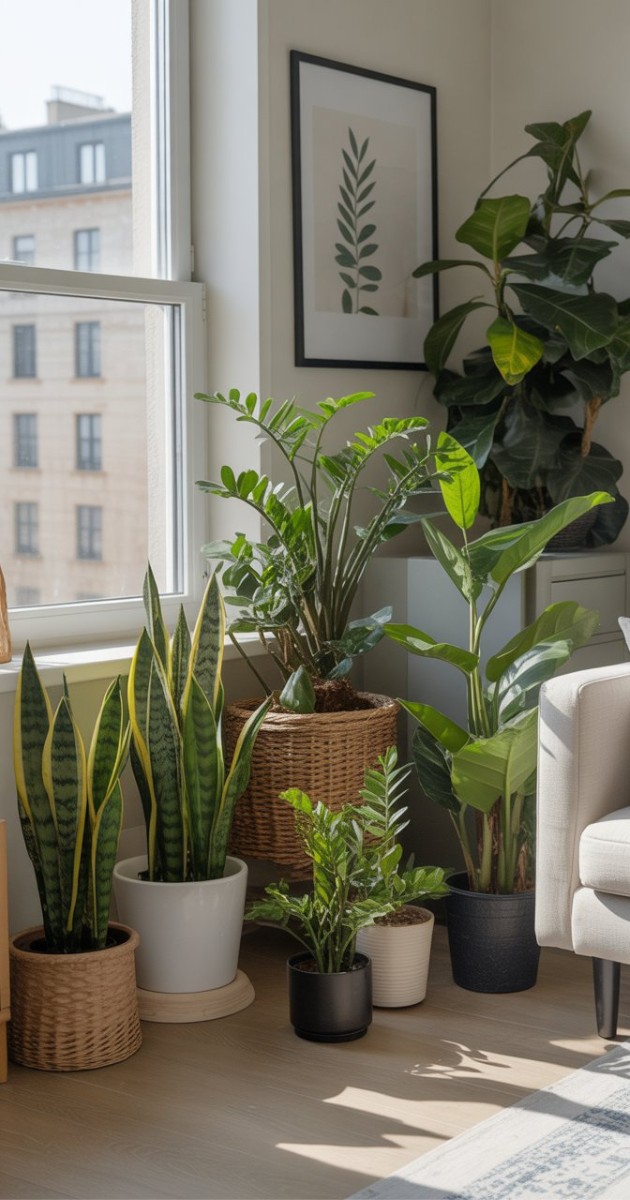
If you’re short on time, start with these low-maintenance indoor plants:
Snake Plant (Sansevieria)
- Can handle both low light and bright, filtered light.
-
Needs watering only when soil is completely dry
-
Tolerates occasional missed waterings.
ZZ Plant (Zamioculcas zamiifolia)
-
Extremely drought-tolerant
-
Thrives in average indoor light
-
Rarely complains
Pothos
-
Grows in various light conditions
-
Bounces back quickly if underwatered
-
Easy to trim and maintain
Cast Iron Plant
-
Handles low light and neglect
-
Slow-growing (less frequent repotting)
These plants are perfect for indoor plant care for busy people because they forgive inconsistency.
Step 2: Stop Watering on a Calendar
One of the biggest time-wasters—and plant killers—is watering every Sunday “just because.”
Instead:
- Poke your finger 1–2 inches below the soil surface.
-
If it feels dry → water
-
If it feels moist → wait
That’s it.
Most beginner houseplants suffer more from overwatering than underwatering. For busy people, this is good news—because missing a watering is usually less harmful than watering too often.
Quick Watering Hack
Keep a small watering can near your sink. When you see dry soil while walking by, water immediately. No reminders, no complicated schedule.
Step 3: Make Light Work for You (Not Against You)
If your plant doesn’t get enough light:
-
Growth slows down
-
Leaves can develop a yellow color.
- Soil takes longer to dry out.
For busy plant owners, placing plants correctly from the start saves time later.
Simple Light Guide for Beginners
-
Bright indirect light: Close to a window, but protected from direct, intense sunlight.
- Low light: In a room with natural light, but not right next to the window.
-
Direct sun: Right on a sunny windowsill
Most low-maintenance plants prefer bright indirect light but tolerate medium light.
Before buying a plant, ask yourself:
“Where will this live in my home?”
Choosing plants based on your existing light conditions makes indoor plant care much easier.
Step 4: Use the Right Pot and Soil
If you only remember one technical detail, let it be this:
Always use pots with drainage holes.
Without drainage:
-
Moisture pools at the base
-
Roots rot
-
Fungus gnats appear
For busy people, preventing problems is far easier than fixing them.
Keep It Simple with Soil
Use a basic, well-draining indoor potting mix. You don’t need complicated blends as a beginner. Most houseplants grow well in standard indoor plant soil as long as excess water can drain out.
If your decorative pot has no hole, keep the plant in a plastic nursery pot inside it. Remove it to water, let it drain, then place it back.
Zero mess. Minimal effort.
Step 5: Create a 5-Minute Weekly Plant Reset
Instead of daily attention, do a quick weekly check.
Here’s my recommended 5-minute routine:
-
Check soil moisture
-
Remove yellow leaves
-
Rotate the plant slightly for even growth
-
Remove dust from leaves occasionally.
That’s it.
This quick reset prevents small issues from becoming major problems.
And if you miss a week? Most low-maintenance plants will be fine.
Step 6: Accept That “Perfect” Isn’t Necessary
Busy people often think plant care requires perfection. It doesn’t.
Indoor plants are living things. Some leaf drop, slow growth, or occasional yellowing is normal.
Focus on:
-
Overall plant health
-
New growth
-
Firm stems
-
Healthy roots
If most of the plant looks good, you’re doing fine.
Smart Shortcuts for Indoor Plant Care
If you truly have very little time, here are a few realistic strategies:
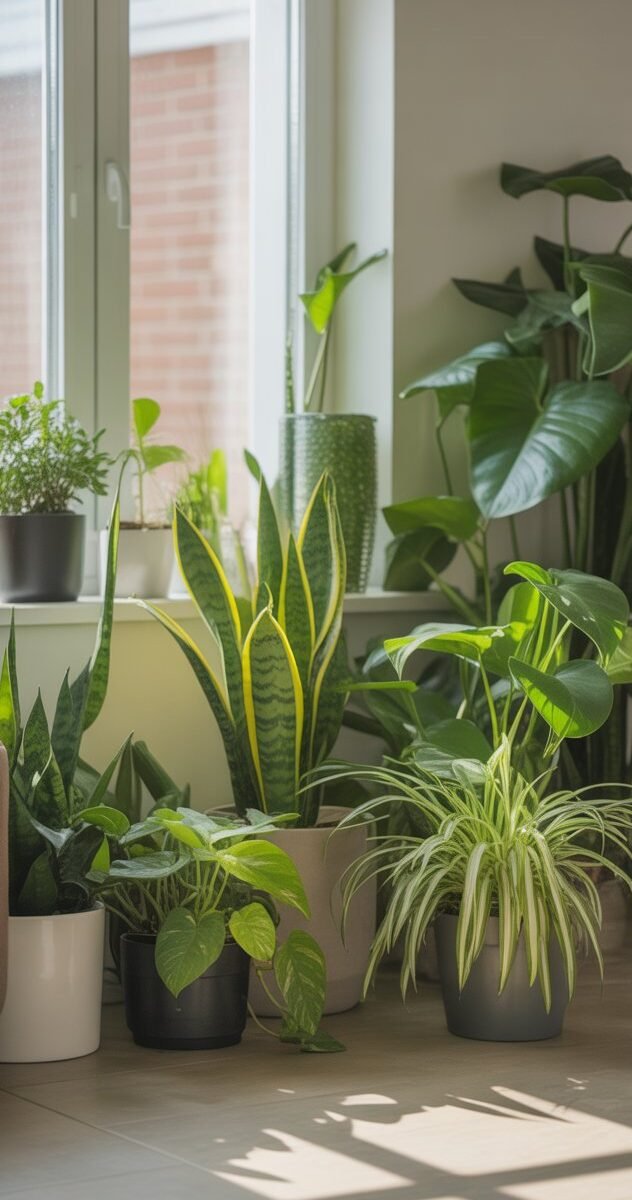
Group Plants Together
-
Makes watering faster
-
Creates humidity naturally
-
Easier visual monitoring
Choose Medium-Sized Plants
Very small pots dry out quickly.
Very large plants need more soil management.
Medium-sized plants are easier to maintain.
Avoid High-Maintenance Varieties (For Now)
Skip:
- Getting started with the Fiddle Leaf Fig.
-
Calatheas
-
High-humidity tropical plants
When you feel ready, you can expand to more demanding plants.
Signs Your Low-Maintenance Plant Is Thriving
When indoor plant care for busy people is done right, you’ll notice:
-
Steady new leaves
-
Strong, upright stems
-
Even green color
-
No foul smell from soil
-
Roots not growing out of drainage holes
These are simple visual checks that don’t require expertise.
What to Do If You Forget Your Plants
Life happens.
If you forget to water and your plant looks droopy:
-
Check soil
-
Water well whenever the soil is dry.
-
Let the surplus water run off completely.
-
Place back in proper light
Many beginner-friendly plants recover quickly.
If you overwatered:
-
Stop watering
-
Let the potting mix dry out entirely
- Make sure the drainage holes are not blocked.
Don’t panic.When addressed quickly, most plant troubles are reversible.
The Real Secret to Indoor Plant Success (Even When You’re Busy)
Consistency beats intensity.
You don’t need:
-
Fancy tools
-
Complicated fertilizer schedules
-
Daily misting routines
You need:
-
The right plant
-
Proper light
-
Drainage
-
Occasional attention
Indoor plant care for busy people works best when you simplify everything.
Plants should reduce stress—not create it.