
The Easiest Indoor Plants That Thrive Even If You Forget Them Sometimes
Starting with houseplants sounds fun—until your first one turns yellow, droops, or mysteriously dies. If you’re new to indoor gardening, the biggest mistake isn’t lack of effort—it’s choosing plants that need too much attention.
The good news? Some houseplants are incredibly forgiving. They don’t mind missed waterings, imperfect light, or beginner mistakes. This guide walks you through the best low-maintenance houseplants for beginners, explains why they’re easy, and shows you how to keep them happy without stress.
Why Low-Maintenance Plants Are Perfect for Beginners
Not all plants are created equal. Some demand precise watering schedules, humidity levels, and lighting conditions. Others? They just want to exist.
Low-maintenance houseplants are ideal because they:
-
Adapt well to typical indoor conditions
-
Tolerate occasional neglect
-
Recover easily from small mistakes
-
Don’t require special tools or fertilizers
If you’re busy, new to plants, or just want greenery without pressure, these plants are your best starting point.
What Makes a Houseplant “Low Maintenance”?
Before diving into specific plants, it helps to understand what actually makes a plant easy to care for.
Beginner-Friendly Plant Traits
Low-maintenance indoor plants usually share these qualities:
-
Slow growth – less pruning and repotting
-
Drought tolerance – forgiving if you forget to water
-
Flexible light needs – happy in bright or medium light
-
Strong roots and leaves – less prone to disease
Plants with thick leaves or sturdy stems are often the toughest.
Best Low-Maintenance Houseplants for Beginners
These plants are proven survivors in real homes—not greenhouses.
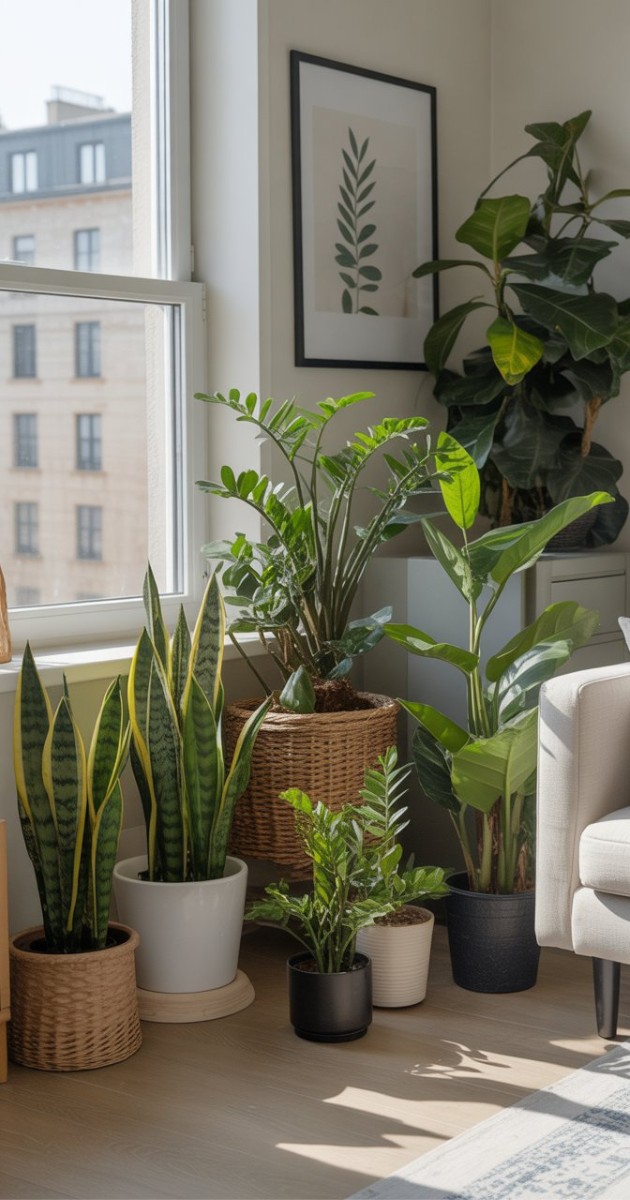
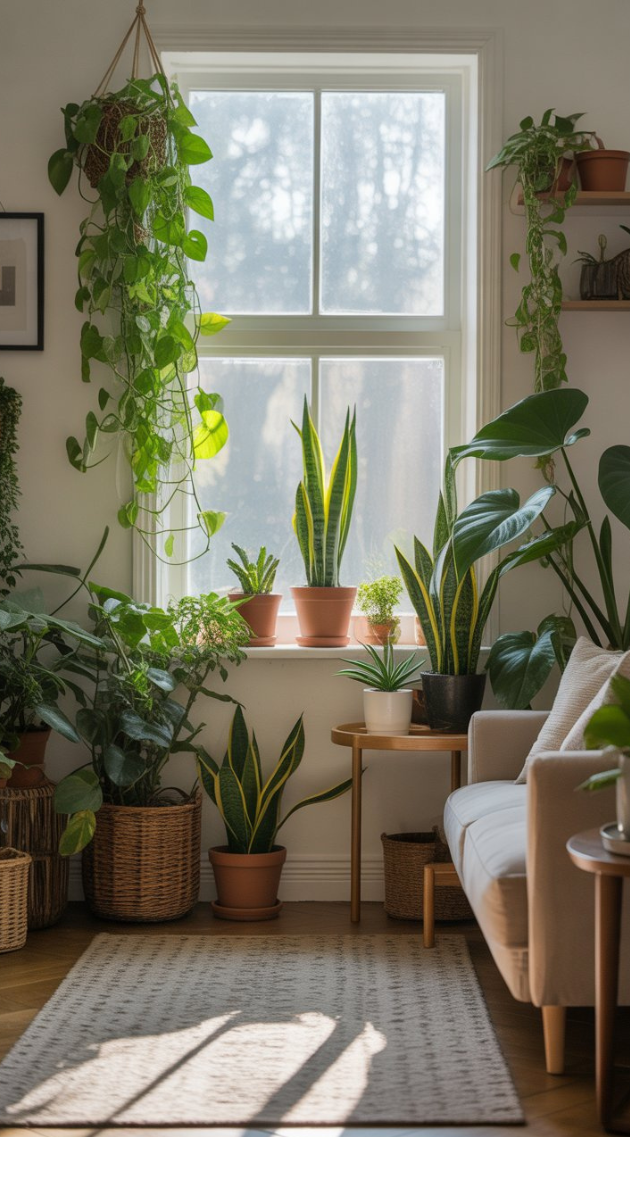
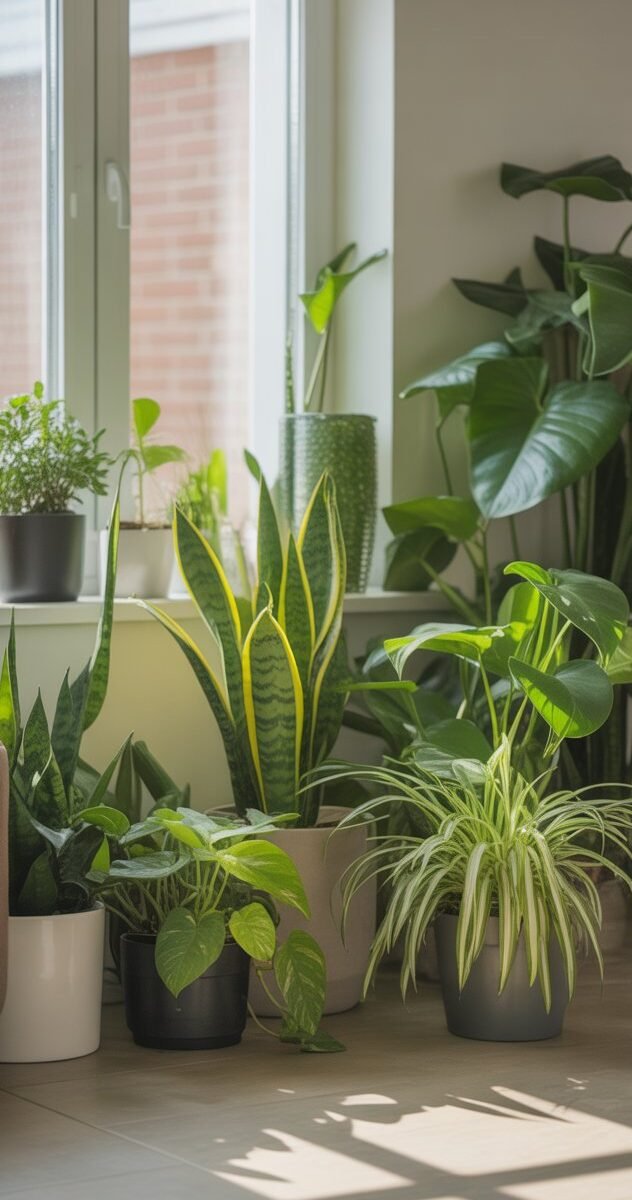
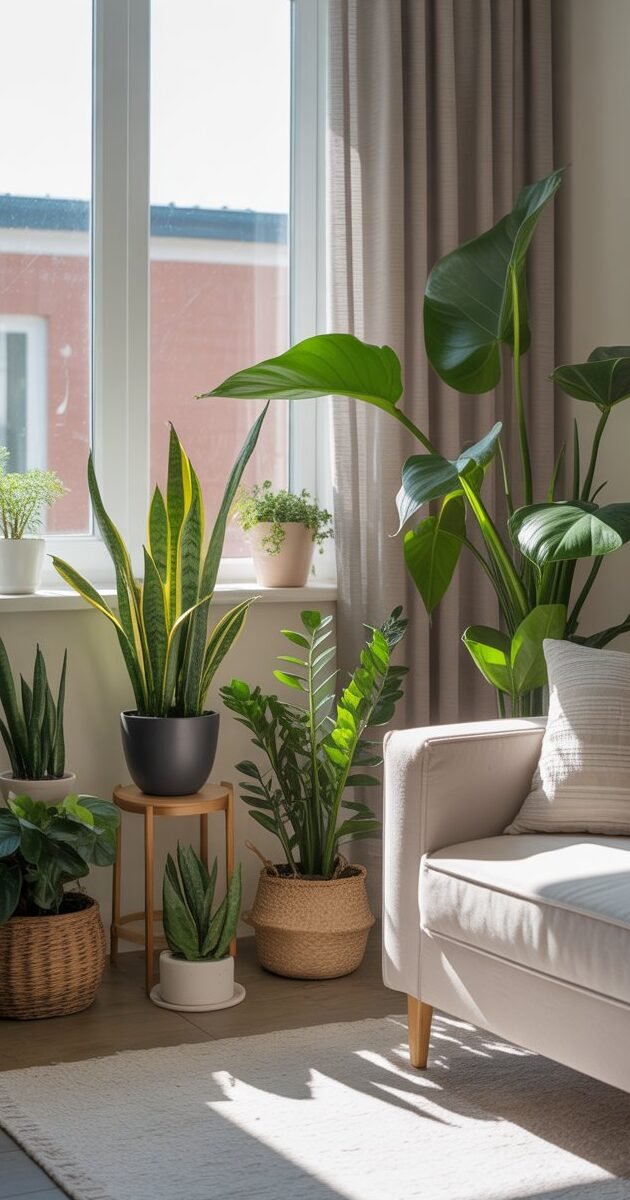
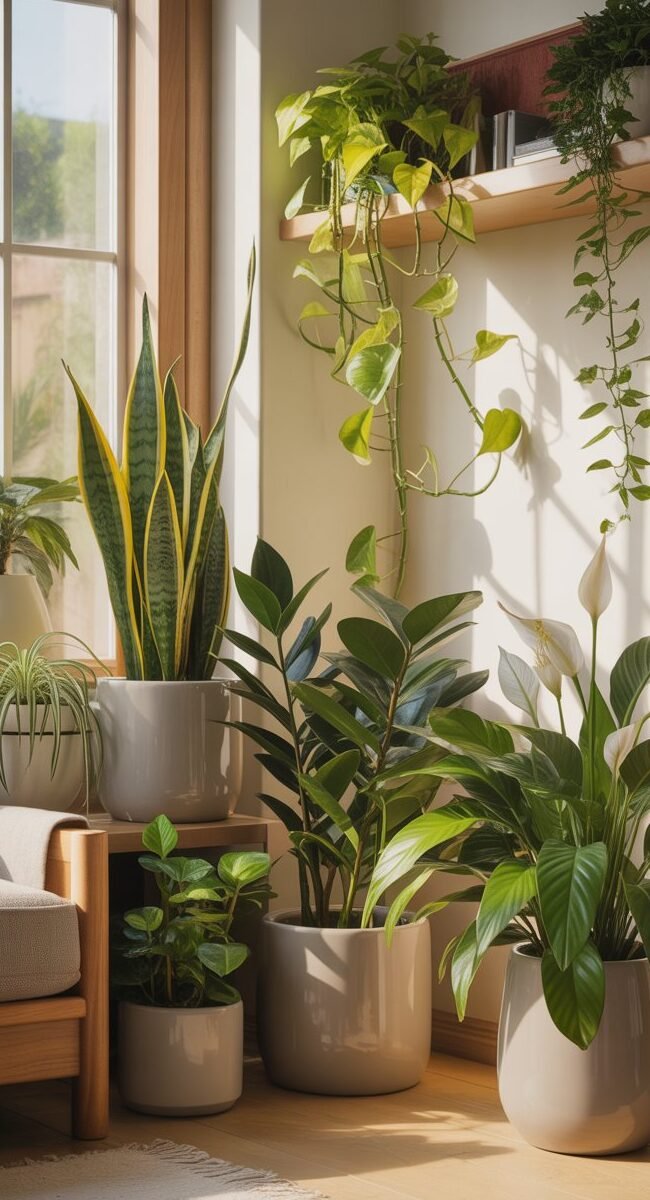
Snake Plant (Sansevieria)
One of the toughest houseplants you can own.
Why beginners love it:
-
Survives low light and bright light
-
Needs watering only every 2–3 weeks
-
Tolerates dry indoor air
Basic care tips:
-
Let soil dry completely between waterings
-
Use a pot with drainage
-
Avoid overwatering (this is the only real risk)
Snake plants are ideal for apartments and offices.
Pothos (Devil’s Ivy)
If you want quick results and climbing plants, the pothos plant is the perfect choice.
Why it’s beginner-friendly:
-
Grows in many light conditions
-
Shows you when it needs water
-
Recovers quickly if neglected
Care basics:
-
Water when top inch of soil is dry
-
Trim vines to keep it full
-
Can grow in hanging baskets or shelves
Pothos is often the plant that turns beginners into plant lovers.
ZZ Plant (Zamioculcas zamiifolia)
This plant practically thrives on being ignored.
Why it’s low maintenance:
-
Stores water in thick roots
-
Handles low light extremely well
-
Rarely affected by pests
Simple care routine:
-
Water every 3–4 weeks
-
Avoid soggy soil
-
Wipe leaves occasionally for shine
Perfect for offices and darker rooms.
Spider Plant
A classic houseplant that has been very popular for decades
Why beginners succeed with it:
-
Grows quickly
-
Produces baby plants (spiderettes)
-
Tolerates missed watering
Care notes:
-
Likes bright, indirect light
-
Water when soil feels dry
-
Trim brown tips if needed
They’re an excellent choice for shelves and hanging baskets.
Peace Lily
If you want a signal that tells you when you need water
Beginner benefits:
-
Droops dramatically when thirsty
-
Recovers quickly after watering
-
Grows well indoors
Care tips:
-
Water when leaves droop
-
Keep in medium, indirect light
-
Avoid direct sunlight
Bonus: Peace lilies occasionally produce elegant white blooms.
Cast Iron Plant (Aspidistra)
As its name suggests, it is a flexible, low-maintenance plant for beginners.
Why it’s great for beginners:
-
Handles low light
-
Tolerates temperature changes
-
Rarely needs attention
Basic care:
-
Water sparingly
-
Keep out of direct sun
-
Dust leaves occasionally
Excellent for hallways and low-light rooms.
Easiest Succulents for Beginners
Succulents are often marketed as easy—but not all are beginner-friendly.
Best Low-Maintenance Succulents
Start with these forgiving options:
-
Aloe Vera – stores water, needs bright light
-
Haworthia – handles lower light than most succulents
-
Gasteria – slow-growing and compact
Succulent care rule #1:
Overwatering kills more succulents than neglect.
Common Beginner Mistakes (and How to Avoid Them)
Even easy plants can struggle if basic rules are ignored.
Overwatering
The most common mistake.
Fix it by:
-
Checking soil before watering
-
Using pots with drainage holes
-
Watering less often than you think
Poor Light Placement
Plants may survive, but won’t thrive.
Solution:
-
Bright, indirect light works for most
-
Avoid harsh afternoon sun
-
Rotate plants every few weeks
Using the Wrong Pot
Decorative pots without drainage can cause root rot.
Beginner tip:
-
Always use a nursery pot inside decorative planters
Simple Care Routine for All Beginner Plants
Keep things easy with this universal routine:
-
Check soil moisture once a week
-
Water only when soil is dry
-
Dust leaves monthly
-
Repot only when roots outgrow the pot
No fancy schedules needed.
You may also like this
Indoor Plants That Improve Air Quality: A Beginner’s Guide to Cleaner Indoor Air
Low-Maintenance Houseplants for Beginners
How to Prevent Pests on Indoor Plants (Beginner-Friendly Guide)
How Many Plants Should a Beginner Start With?
Less is more.
Best approach:
-
Start with 1–3 plants
-
Learn their behavior
-
Add more as confidence grows
Success builds motivation—and better plant care habits.
Final Thoughts: Start Small, Stay Consistent
The easiest way to add life to your home is with low-maintenance houseplants — no gardening experience required, just the right picks and a bit of patience.
Start with forgiving options like snake plants, pothos, ZZ plants, or spider plants, and let experience do the rest. Indoor gardening isn’t about perfection—it’s about learning, enjoying the process, and watching something grow because of you.
Once you succeed with your first easy plant, the rest becomes much simpler 🌿