
If you’ve ever looked at your indoor plant and wondered, “Is it thirsty… or am I overthinking it?” — you’re not alone.
One of the biggest challenges beginners face with indoor plant watering is knowing when to water. Not on a fixed schedule.
Watering too early can cause root rot. Waiting too long can stress your plant. The key is learning to read the signs your plant gives you.
In this guide, I’ll walk you through the most common signs your indoor plant needs more water, what they actually mean, and how to respond correctly — without guessing.
Why Watering Isn’t About a Calendar
Many beginners in the U.S. start with a watering schedule. It sounds simple: water every Saturday and you’re done.
But indoor plants don’t follow calendars. They respond to:
-
Light exposure
-
Room temperature
-
Humidity levels
-
Pot size
-
Type of soil
-
Plant species
A plant in a sunny Arizona window will dry out faster than the same plant in a shaded apartment in Seattle.
Instead of following dates, learn to watch for physical signs.
1. Wilting Leaves That Feel Thin or Soft
Wilting is one of the most obvious signs your indoor plant needs more water.
What it looks like:
-
Leaves droop downward
-
Stems bend slightly
-
The plant looks tired or limp
How to check:
Gently touch the leaves.
-
If they feel thin, soft, and flexible → likely underwatered
-
If they feel mushy and yellow → possibly overwatered
Wilting from dryness usually improves quickly after proper watering. Within a few hours, many plants perk back up.
Tip: Always check the soil before watering. Wilting alone isn’t enough.
2. Dry Soil Pulling Away From the Pot Edges
This is one of the clearest indicators.
When soil becomes extremely dry, it shrinks and separates from the sides of the pot.
What you might notice:
-
Soil surface looks dusty or cracked
-
Water runs straight through when you pour it
If this happens, your plant has likely been dry for a while.
What to do:
-
Water at a slow, steady pace down to the roots
-
Allow water to drain completely
-
Repeat after a few minutes if needed
In severe cases, bottom watering (placing the pot in water for 20–30 minutes) helps rehydrate the soil evenly.
3. Crispy, Brown Leaf Edges
Brown tips don’t always mean low humidity. Often, they’re related to inconsistent or insufficient watering.
Look for:
-
Dry, crunchy edges
-
Leaves curling inward
-
Brown areas starting at the tips
This is especially common in peace lilies, spider plants, and calatheas.
When dryness extends several inches into the soil, insufficient watering could be the cause.
4. Lightweight Pot
This is a trick experienced gardeners use all the time.
Lift your plant pot right after watering. Feel how heavy it is. Then check again when you think it might need water.
A pot that feels unusually light is often a sign the soil has dried out.
This method works especially well for:
-
Pothos
-
Snake plants
-
Philodendrons
-
ZZ plants
With practice, you’ll recognize the difference immediately.
5. Slower Growth or Dull Leaves
Plants need water to move nutrients through their system.
When they don’t get enough:
-
Growth slows down
-
Leaves lose their shine
-
New leaves appear smaller
If lighting conditions haven’t changed and your plant looks stalled, check the soil moisture before assuming anything else.
6. Leaves Dropping Prematurely
Some plants shed older leaves naturally. But if multiple leaves drop suddenly and the soil feels dry, underwatering could be the cause.
This is common with:
-
Fiddle leaf figs
-
Rubber plants
-
Crotons
If the soil is bone dry and leaves are falling, it’s time to water thoroughly.
How to Check Soil the Right Way
Instead of guessing, use one of these simple methods:
The Finger Test
-
If it feels dry → water
-
If it feels moist → wait
For larger pots, check deeper (about 2–3 inches).
Wooden Stick Method
Insert a chopstick or wooden skewer into the soil.
If the object is removed without any moisture or soil sticking to it, this usually indicates that the plant requires watering.
Moisture Meter (Optional)
Helpful for beginners, but not required. Always double-check manually at first.
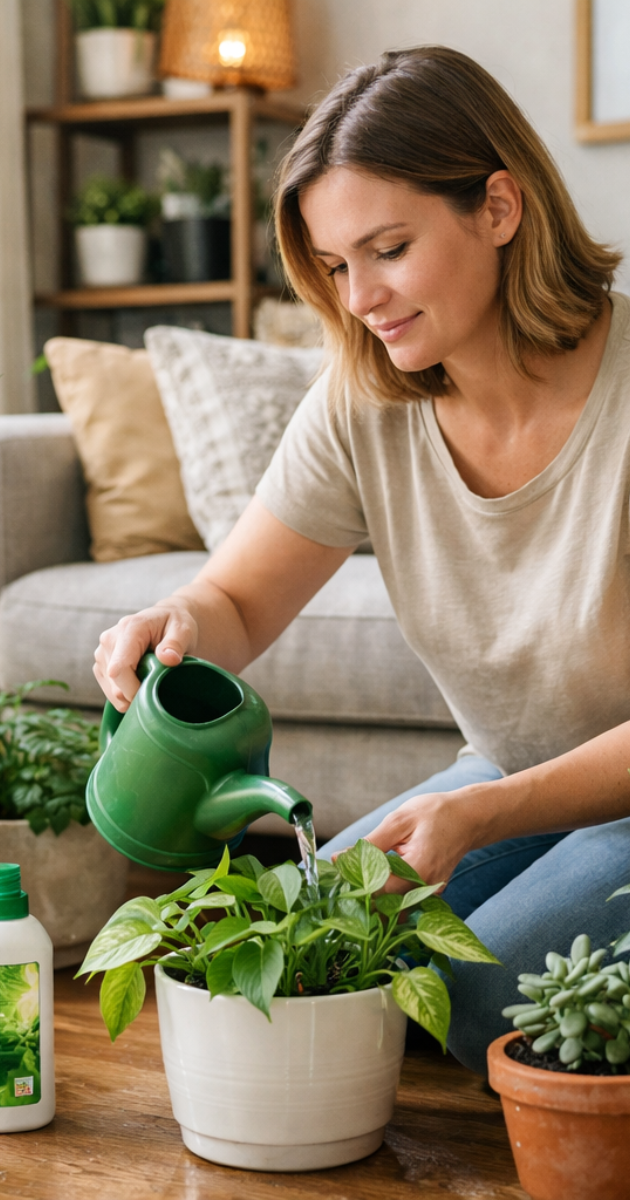
How to Water Properly Once You See the Signs
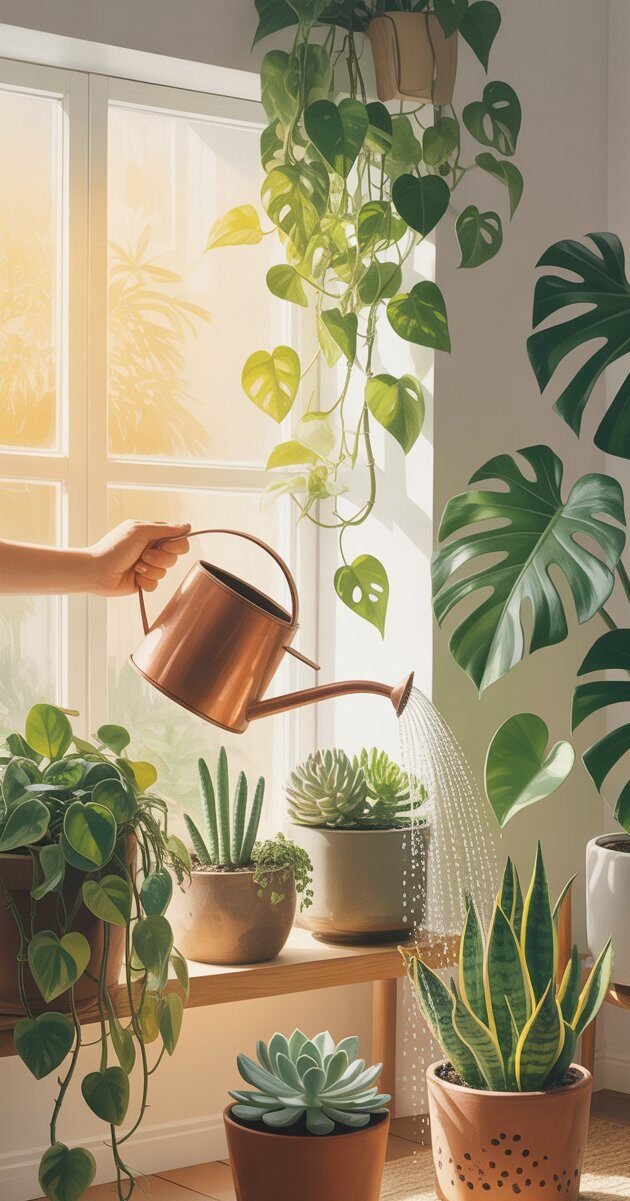
When you confirm your plant needs water:
-
Water slowly and evenly around the soil surface
-
Continue until water drains from the bottom
Never let indoor plants sit in standing water. That leads to root rot — the opposite problem.
Common Beginner Mistake: Panic Watering
One dry leaf doesn’t mean your plant is dying.
Avoid:
-
Adding extra water after you already watered
-
Following rigid schedules
Overwatering is still more dangerous than underwatering for most indoor plants.
If you’re unsure, wait one more day and recheck the soil.
Plants That Tolerate Dry Soil Better
Some beginner-friendly plants handle occasional missed watering:
-
Snake plant
-
ZZ plant
-
Pothos
-
Aloe vera
These are great choices if you’re still learning indoor plant watering basics.
Seasonal Watering Changes
Indoor plants usually need:
-
More water in spring and summer
-
Reduce watering during fall and winter.
During winter, soil stays moist longer due to lower light and slower growth. Always adjust based on season.
You may also like this
How to Propagate Indoor Plants at Home (Beginner-Friendly Guide)
Easy Indoor Plants Anyone Can Grow
Indoor Gardening Tips for Small Spaces: A Beginner’s Guide to Growing More in Less Room
Low-Maintenance Houseplants for Beginners
FAQ
How can I tell whether my plant is receiving too little or too much water?
Begin by examining the soil. If it feels dry and the leaves appear limp or thin, the plant is likely lacking water. On the other hand, consistently moist soil accompanied by yellowing or soft, mushy leaves typically indicates excessive watering.
How frequently should indoor plants be watered?
There is no universal timetable for watering. Instead of following a strict routine, check the soil and water only when the top one to two inches have dried out.
Can a plant recover after becoming too dry?
In many cases, indoor plants can bounce back if they are watered thoroughly before serious damage develops.
Is it preferable to underwater or overwater a plant?
Allowing a plant to become slightly dry is usually less harmful than overwatering. Excess moisture can cause root rot, a condition that is much more difficult to correct.
Final Thoughts: Let Your Plant Tell You
Learning the signs your indoor plant needs more water is one of the most important indoor gardening skills.
Skip the calendar and observe:
-
Soil dryness
-
Leaf texture
-
Pot weight
-
Overall plant appearance
Healthy indoor plant watering is about observation — not routine.
Once you get comfortable reading these signs, caring for houseplants becomes much less stressful and much more rewarding.
Your plants are constantly communicating. All it takes is understanding how to pay attention and interpret the signs.